
What would your life feel like if you gave yourself permission to follow the spontaneous impulse; without guilt, hesitation, self-correction or self-censorship?
Most people don’t realize how deeply they’ve been conditioned to suppress spontaneity. We demonize it as “impulsivness”. We override it with an addiction to being productive, viewing spontaneity as counter-productive. We distrust spontaneity in favor of ever-increasing means and mechanisms of self control. We replace it with planning, overthinking, and rigid identity roles. But underneath all of that is a core truth:
Spontaneity is your natural way of being. And it is a direct portal to your liberation.
This morning’s meditation teaching explored how the reclaiming of spontaneity, through subtle in-the-moment choices and deep self-listening, is not just a lifestyle shift. It’s a spiritual return to your essence as a liberated creator of your life. A homecoming to the unconditioned self that knows how to move and flow with life, not against it.
Liberation Through Spontaneity Isn’t Random, It’s Reverent
Contrary to popular belief, spontaneity isn’t disorganized chaos. It isn’t reckless or reactive. True spontaneity is deeply reverent. It is your soul responding to life from the now, from presence, not from fear, not from habit, and not from a projected future you are attached to.
Spontaneity arises when we’re no longer trying to perform or protect. It emerges from presence. From coherence. From the quiet inner “yes” that bubbles up when mind and body are unified and attuned.
But we’re rarely taught to trust it.
Instead, we’re trained to distrust what’s natural and lean into what’s artificial. We’re told to plan, to calculate, to control by filtering every urge through a lens of appropriateness, obligation, and expected outcome.
The result?
We become rigid. Predictable. Trapped in habituated patterns that no longer reflect who we are, and emotionally numb to the life of aliveness we secretly long to feel and live from.
The Death of Aliveness: How We Were Taught to Suppress Play
It starts early.
As children, our instinct is to move, dance, create, explore, try, and respond. We are in the moment. That’s how we learn. That’s how we connect to wonderment and joy. But very quickly, those impulses are “corrected”… repressed.
We’re told to sit still. Be quiet. Follow the rules. Be agreeable. Have a goal, a plan.
Our natural energy gets labeled as “too much”, “not enough”, or “not appropriate,” and we begin to associate spontaneity with disapproval. We learn that to belong we must suppress the impulse to be fully ourselves, whole and complete as we naturally are.
And it doesn’t stop in childhood.
In adult life, spontaneity is further demonized. It’s labeled irresponsible. Unprofessional. Even dangerous, risky. The body says, “Leave this room.” The mind says, “You can’t. What will people think?” The soul says, “Say yes to this opportunity.” The ego responds, “It’s not the right time”, or “it’s too dangerous, it’s unknown”.
The more we suppress, the more we forget how to hear the inner nudge of our true selves at all. But it never stops whispering. And when we begin to listen again, something profound happens:
We come alive.
The Link Between Spontaneity and Aliveness
One of the most powerful insights from today’s teaching is this:
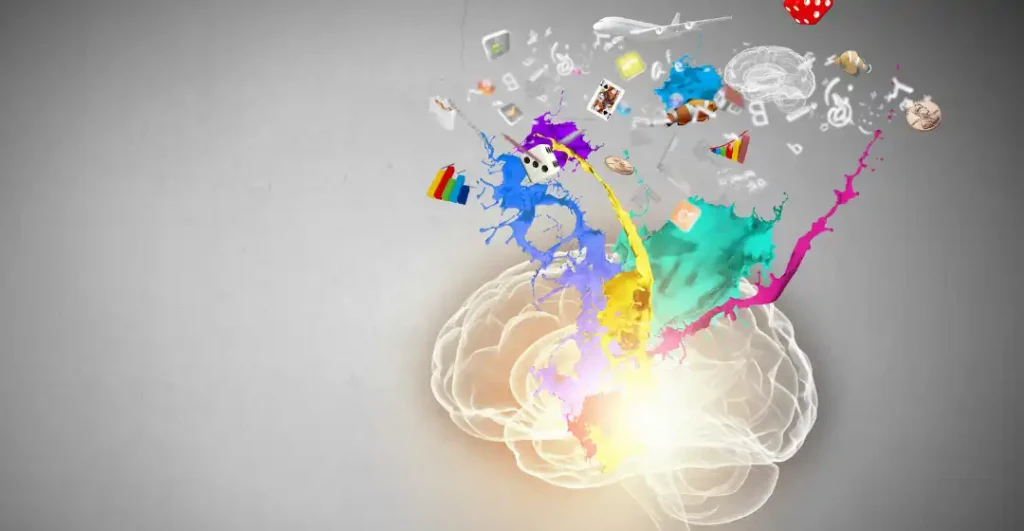
Your aliveness is directly correlated to how much spontaneity you allow.
Spontaneity reintroduces novelty into the nervous system, and allows it to regulate itself in the midst of the unknown. It invites creativity, courage, and presence. It opens new neural pathways, and activates old ones that have been dulled by routine. And perhaps most importantly, it disrupts the loop of self-management, self-censorship and performance that keeps so many of us trapped in a life that looks good on the outside, but feels hollow on the inside.
When we’re spontaneous, we don’t just do things differently; we feel differently because we move from doing to being. We soften. We awaken. We start noticing again. The edges of life become more vibrant. Possibility returns.
It’s not about saying yes to every invitation, but it is about saying yes to every possibility (whether we act on it or not depends on whether it aligns). It’s about staying open to what life wants to offer you in real time.
Spontaneity doesn’t require chaos. It requires curiosity, which can occur as chaos to the unregulated nervous system.
Decision-Making vs. Presence-Based Choice
We were reminded today of a critical distinction: the difference between decision-making and choice.
Decisions are made in the mind.
Decisions are rooted in elimination, comparison, and projection. To decide etymologically means “to cut off.” When you decide, you narrow. You control. You reduce possibility to a binary.
Choice, on the other hand, is made in the body.
It emerges from presence. It includes the full spectrum of possibility and filters it through felt alignment. You don’t decide what feels right, you know it, you embody it. You feel the resonance or the dissonance. You sense the energy, or lack thereof. You don’t cut off— you lean in.
When you live through decisions, your life gets smaller. When you live through presence-based choice, your life expands.
Spontaneity only exists when choice, not preemptive decision, is your compass.
Why We Say No to Life
Every time you say no to a spontaneous impulse, it’s worth asking: What part of me said no?
Was it the part that was scared?
The part that needed approval?
The part that has been burned before?
These are not bad parts. But they’re not meant to be in charge of your aliveness, and therefore shouldn’t be directing your life and your choices.
So many of us say no to the very thing our soul is craving, simply because we’re not used to living in the present. We’re projecting stories from the past into the present, and hedging our future; reacting to a scenario that doesn’t actually exist yet.
Today’s teaching invited us to pause, not to blindly say yes, but to become aware of the suppressive, resistant and discordant disassociated energy behind our no.
Sometimes a no is wise and aligned… sometimes But other times (often times), it’s just habit.
Spontaneity invites us to check in with the body before we respond from the logical, rational mind. Because this part of our mind will rationalize all our resistance. It literally tells us rational lies, and we believe them, because they keep us trapped in comfort and the avoidance of effort.
The “Yes, And…” Practice
One of the most practical teachings of the day was the “yes, and”… framework.
This approach helps us transition from reactive no’s to responsive engagement. You don’t have to commit fully to something that doesn’t feel right. But you can stay open. Oftentimes things that don’t feel right only feel that way because they’re foreign to us, and that makes them unknown. We need to titrate ourselves into the ability to be with the newness of the unknown that is opening to and for us. To expand your nervous system you can begin to play with “yes, and…”.
- Yes, I’ll go to the gathering… and I’ll leave when I need to.
- Yes, I’ll try the new project… and I’ll set clear boundaries for how I show up.
- Yes, I’ll engage with this person… and I’ll honor my energy in the process.
This “yes, and…” posture lets life in, without compromising your center. It helps you train the people around you to experience the authentic version of you, not the conditioned one they’ve grown used to.
And that energetic shift? It’s loud. People feel it.
You don’t need to enforce boundaries from the mind. When you’re living as your true self, misaligned things fall away on their own. You become the boundary through embodiment.
Retraining Your Reality
As you begin to live from this spontaneous orientation, your entire field changes.
At first, this may feel disruptive. You may question yourself. People may react differently to your presence. You might lose certain relationships or roles you’ve outgrown.
But you’re not doing anything wrong.
You’re coming home.
Liberation is not about perfect clarity. It’s about authentic participation. You are retraining your nervous system to live from and into expansion, not contraction. And that’s going to feel foreign at first, especially if you’ve spent decades managing, performing, contracting, and suppressing.
But keep going. The field will catch up. And the invitations you receive will begin to match who you actually are.
The Neurosculpting Integration
Today’s meditation with Mignon offered a powerful somatic integration of the spontaneity theme. Participants were invited to relax into the present, breathe deeply, and explore their brain as a symbolic landscape of possibility.
They visualized hemispheric balance, left brain quieting, right brain awakening, so the analytical could soften and the intuitive could reemerge. They were then guided through dismantling an old belief constellation (represented by stars in the sky of the mind), and installing a new, more supportive one.
This is how we change not through force, but through felt reorientation.
With each gesture, anchor word, or imagined shift, the nervous system learns: It is safe to choose something new.
That safety is what unlocks spontaneity.
The Return to Play
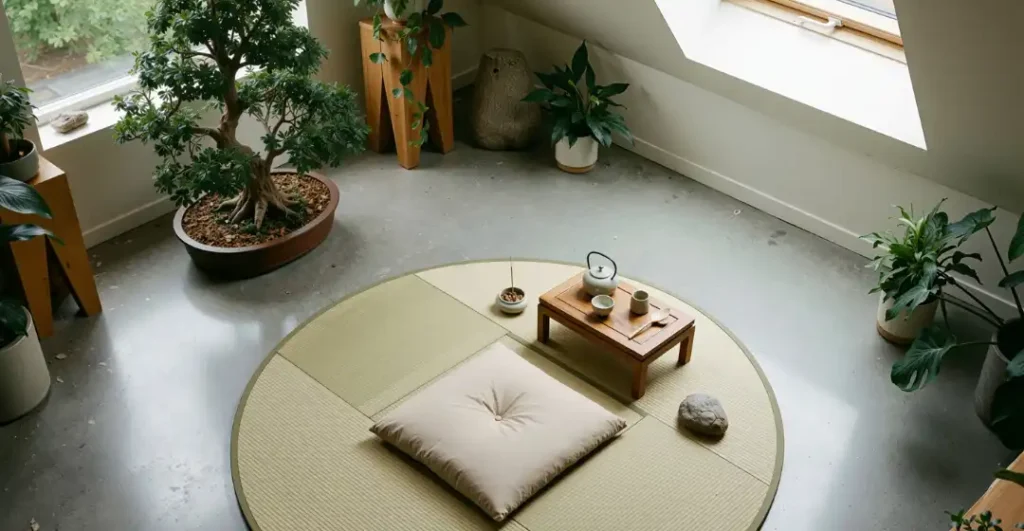
At the core of spontaneity is a return to play. And at the core of play is truth.
We don’t play when we’re scared. We don’t play when we’re managing. We don’t play when we’re hiding. But when we’re in our natural state (loose, open, present) we play without hesitation.
That’s what liberation feels like.
Not striving. Not enduring. But moving with life as it moves through you.
So today, the invitation is simple:
Try something spontaneous.
Say yes to something you would’ve overanalyzed. Let yourself play with an idea or a moment. Choose presence over performance. Let your being, not your planning, do the talking.
Because in that moment, you’ll remember what it feels like to be alive.
Join Us for Morning Meditation
Practice the art of spontaneous living in community.
Join us Monday through Friday from 10:00 AM to 11:00 AM EST for daily live meditation.
You don’t need to be more prepared. You only need to be more present.