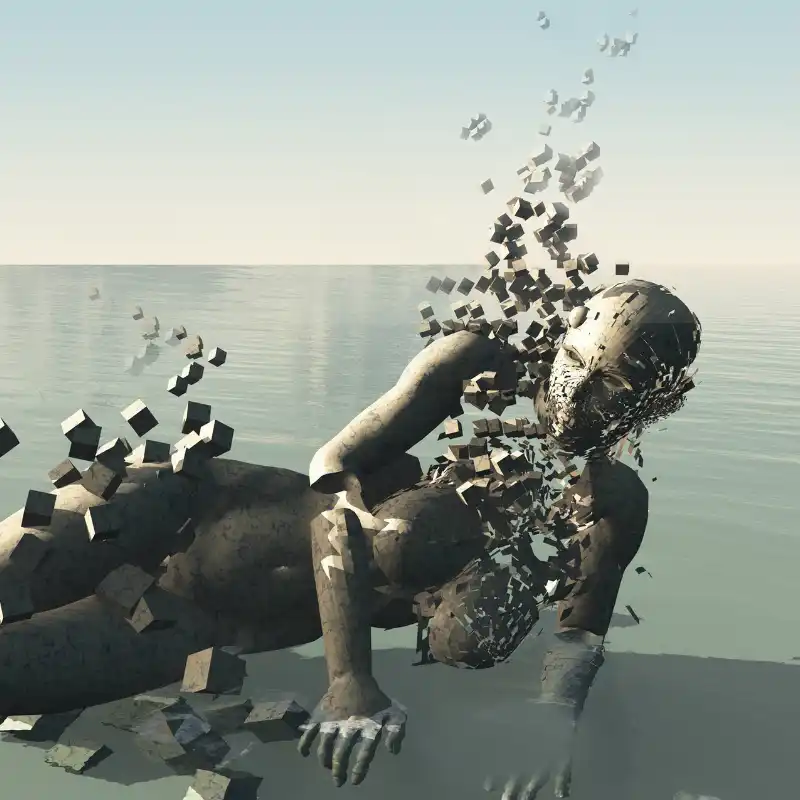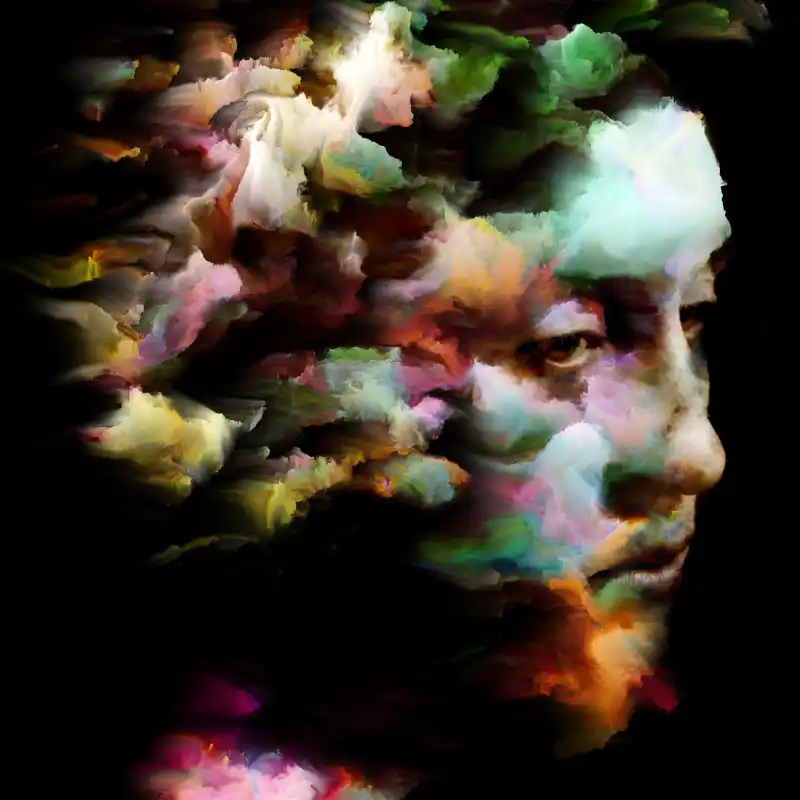
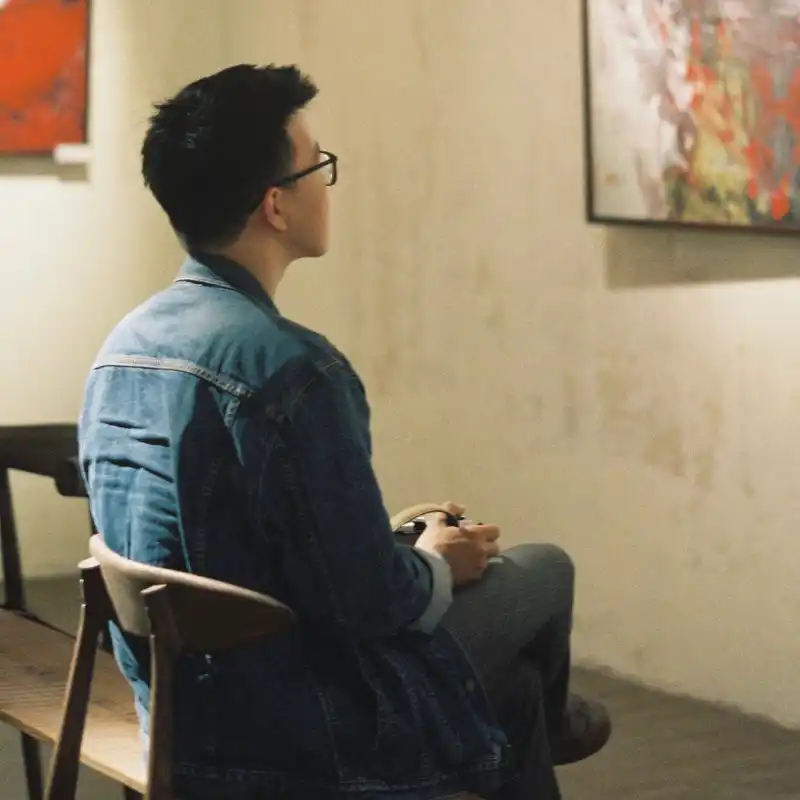
Becoming the Watcher begins with a single, disorienting question: what if the vast majority of your thoughts were never really yours? It’s a question that lies at the heart of today’s meditation, guiding us into the deeper exploration of liberation; this time, turning inward toward the terrain of the thinking mind. We began to challenge the assumption that every thought we have is worth acting on.The mind, like the heart or lungs, is a vital organ that performs its function whether we ask it to or not. Just as the heart beats and the lungs breathe, the mind thinks. But if we’re not careful, we’ll confuse the process of thinking and our very thoughts themselves for our identity. We’ll begin to believe that the thoughts our brain thinks are uniquely ours (that they are us) not realizing that instead of us possessing and mastering our thoughts, they possess and master us. Subsequently, we’ll mistake the thoughts we receive as truths we must obey. And that confusion is what leads us into entanglement, overwhelm, and a life dictated not by alignment, but by unconscious, habitual reaction to every thought that arises, most of which are subconscious or below our level of awareness.This is the path many walk: not a life we are actively creating by design, but a life we are merely tolerating by default.

Becoming The Watcher of Thoughts That Are Not Personal
Let’s start with the foundational premise: thoughts are not unique to you. They are not even of you.
In fact, thoughts, especially ideas, exist within a collective field of consciousness. Your mind operates much like a radio receiver, tuning into a wide array of thought frequencies. Some are creative, some are compulsive, some are brilliant, some are fear-based. But the key here is this: Just because your mind receives a thought doesn’t mean it belongs to you.
And certainly, it doesn’t mean you have to act on it.
Ideas are looking for a host, someone to act on them. Some ideas are truly meant for you, especially if they resonate with your body, stir something in your spirit, and align with your intention, while others simply pass through. They enter your awareness because your “signal” happened to be open to them at that moment. But they are not yours unless you choose to engage them.
Engagement Is Where Entanglement Begins
Liberation requires a radical reframing of our relationship to thoughts.
We don’t need to engage with every thought that arises, and we certainly don’t need to obsess over and analyze all the ideas that come to us. Most of the time, the wisest move is simply to observe. To watch.
This is the foundation of the observer/watcher meditation practice; becoming the witness to your mental landscape without reacting to it. Like watching birds fly by or clouds move across the sky, you let thoughts be transient, and you let them come and go.
But the moment you attach to a thought, give it weight, wrap it with meaning, and take actions based on it, especially without discernment, you enter into its ecosystem. And every idea has one.
With every action you take based on a thought, you are not just committing your time, you’re entering into an energetic relational contract. Other people, obligations, and outcomes will begin to orbit that action. Which means: if the idea wasn’t aligned with you to begin with, you’ve now entangled yourself in a life that is out of sync and out of alignment with your intention.
And this is how most people become overwhelmed, stuck, and disillusioned. They’re not living in alignment. They’re living in reaction. How do you know this is happening to you? Because you’re complaining about things. Complaint is a powerful insight to where we are out of alignment with what truly aligns with us.

Why We Chase Every Thought
So why do we engage in this way?
Because we’ve been conditioned to. Our minds are addiction-making, meaning-making survival machines. They’re built to scan for threats, solve problems, and seek the approval of others. Many (dare we say most) of our actions are not rooted in truth, they’re rooted in fear.
- Fear of missing out.
- Fear of being judged.
- Fear of disappointing others.
- Fear of being left behind.
So when an idea comes through, we jump on it. We say yes before checking in with ourselves for resonance. We sign up, agree, commit, and pursue, not because it feels right, but because it feels urgent and some sense of fear is pushing that sense of urgency.
The result?
We become enmeshed in tasks, relationships, and responsibilities that drain our life-force energy and dilute our presence. We become so busy reacting to the noise that we can no longer hear the wisdom signals of our own alignment; our own “knowings”.
The Power of Discernment
The practice of liberation through thought is not about ignoring ideas. It’s about discerning which ones are truly yours to engage with.
This discernment doesn’t come from the intellect. It’s not a mental, heady thing. It comes from Emotional Sobriety; from being able to feel the yes and the no clearly in your body.
A true yes feels clean, coherent, and energizing. “Yes” should provide you with the experience of aliveness., It doesn’t arise from pressure or conditioning, it arises from a visceral resonance; a felt sense, not a mental, intellectual or logical calculation.
When you learn to feel that in your body, your relationship to thought changes. You no longer chase every idea. You wait, feel, and watch. And when the time comes, you act with the ease of clarity, not compulsion.
Life by Design, Not by Default
When people live in reaction to thoughts, their lives become topic-driven noise. Their relationships, careers, and decisions orbit around surface-level commonalities such as shared interests, trending ideas, and immediate needs.
But interests are not the same as values, and shared preferences are not the same as deep resonance.
For example, you might like the same books or hobbies as someone else, but that doesn’t always mean they belong in your inner circle. You might get excited about a business opportunity, but that doesn’t always mean it’s yours to lead or take hold of.
To design your life, rather than drift through it, you must learn to engage only with what aligns, and to do that, you need to connect to your intention and honor space.
The space between the thoughts.
The space between the actions.
The space between the ideas.
The space between your responses.‘The space between’ is where your true power lives.

How Entanglements Steal Your Freedom
Every idea you engage with will lead to some action. Every action leads to a relationship to someone or something. And every relationship carries an inherent responsibility.
If you’ve ever looked at your calendar or to-do list and wondered, “How did I get so busy with things I don’t actually care about?”—this is why.
Each unaligned yes creates an unwanted obligation, and those kinds of obligations start stacking up—quickly. Eventually, your day, your energy, and your focus are consumed by tasks and people that were never meant to be part of your aligned path.
This is how you lose your liberation: one innocent “Sure, why not?” at a time, over years.
The more entangled you become, the harder it is to hear yourself, trust yourself, and to act with clarity and strength. And so, the work becomes learning to inject space: to pause, to wait, and to observe.
Our ideas are not ours. So we don’t have to carry or act on every idea we become present to. And we certainly need to make our subconscious conscious, so that we are not subconsciously driven to act by ideas that we are unknowingly latching onto, simply because we latched onto similar ideas in the past. Learn to let more pass through you, rather than engaging with as many as you can.
Emotional Sobriety as a Compass
One of the most liberating truths is this:
You are not your thoughts. You are not your emotions. You are the watcher and observer of them.
When you practice observing thoughts rather than reacting to them, you reclaim your aligned energy, and you also start to rebuild and reinforce trust with yourself.
You learn what your authentic yes feels like. You begin to recognize the difference between a fear-based reaction and a soul-based instinct You stop needing others to validate your choices, because your body already tells you what’s true and what isn’t.
This is what we mean by Emotional Sobriety: the ability to feel, without being ruled by and reacting to feeling. The ability to think, without being ruled by and reacting to thought.
Emotional Sobriety gives you access to your instinct, your intuition, and this inner-knowing is the basis of self-trust, and self-trust is the soil in which liberation grows.

Choosing to Wait, Choosing to Watch
There’s a quiet power in doing nothing. Not out of laziness, but out of wisdom.
Sometimes the most aligned thing you can do is pause. Watch. Breathe. Do nothing.
In our culture we have all heard people say: “don’t just sit there, do something”. But the reverse is where power lies: “don’t just do something, sit there”! Sit, watch, and observe. It’s always better to “do nothing” than to act in a way that opens up a Pandora’s box of responsibilities and obligations you’ll later need to unravel. Better to let the idea pass than to entangle yourself in something that was never yours to begin with.
True power is not in doing more. It’s in knowing when not to act. Rather than celebrate our free will, learn to exercise your free won’t.
As our meditation guide said today: “The only thing we control is how we respond to life, everything else is the illusion of control.”
The Path of the Watcher
To be liberated is to be committed and unattached. And this requires self-trust and discernment. For this you need to know yourself. Unfortunately very few people do. ,You are here to participate in life. To create, and to build. But not everything that passes through your field is meant for you. The path to knowing what is, and what isn’t, is found in the watcher/observer practice.
You are not the doer. You are not the fixer, and you are not the sum of your thoughts.
You are the watcher. The Observer.
And from that powerful vantage point, you learn when to move effortlessly without any forced action. You learn when to pause, when to say yes, and most importantly, when to say no – when to lovingly let the idea float on by.

Recap: 7 Ways to Liberate Your Thinking and Reclaim Your Power
Liberated thinking doesn’t happen by accident. Attaining it is a conscious practice of dropping, letting go and surrendering. And this begins as a way of being. Here are seven powerful shifts to help you return to your center, reclaim your alignment, and design your life with intention:
- Disentangle from the illusion that every thought is yours.
Your mind is a receiver, not a source. Just because a thought passes through doesn’t mean it belongs to you. - Stop engaging with every idea that crosses your awareness.
Observation without attachment is what keeps you free. Not every thought is meant for action. In fact few are. - Recognize fear-based urgency for what it is.
Many reactive choices are driven by fear—fear of missing out, of not being enough, of falling behind. Liberation starts when you stop letting fear drive. - Practice discernment through Emotional Sobriety.
The true “yes” lives in your body. It’s a feeling; it’s instinct and intuition discerned. When you’re clear, calm, and connected, you know what to engage with—and what to let pass. - Design your life through intentional use of space.
The space between your thoughts, actions, and responses is where alignment lives. That space is sacred. - Release the need to fix, solve, or prove.
You are not your thoughts. You are not the fixer. You are the watcher—and from that place, you reclaim your power. - “Mind the Gap”: Trust the wisdom of the pause.
Doing nothing isn’t passive. It’s powerful. Often the most aligned choice is to wait, watch, and breathe.
Join Us for Morning Meditation
Join us weekday mornings, Monday through Friday from 10:00 AM to 11:00 AM EST inside TMIC’s free meditation community and practice becoming the watcher; one breath, one moment, one powerful pause at a time.